





3242 S National Ave
Springfield, MO 65807
(417)-889-5353

Digital Hearing Aids: Common Myths
By Michael J Curry
There are a lot of misconceptions floating around about hearing loss. Some may have once been true, but are no longer valid claims. Others are outright myths which have developed due to stereotypes and a lack of understanding as to how it actually works. Debunking these myths is important. The world needs to understand how hearing loss works, who is affected and what can be done to treat it. Those suffering from it need to know the truth; myths can create a sense of fear that creates undue stress. Knowing the truth can give those suffering from loss much added peace of mind.
Myth #1: Hearing Aids are too expensive.
Truth: Maybe back in the day... today's hearing aids are affordable. Many are low-priced to begin with, but there are also discount options as well. If one has to choose a hearing aid that is not so cheap, due to their hearing needs, there are insurance plans, financing options and tax credits as well. You don't have to go broke for the sake of better hearing.
Myth #2: Hearing loss is just a part of aging. It will happen, no matter what.
Truth: It is not inevitable. There are many factors which play a role in the loss of hearing. Prevention is the key to stopping hearing loss in its tracks. Make sure you keep a watch on other health problems, such as frequent ear infections, heart problems and diabetes, as these can contribute to hearing loss. Always protect your ears in noisy environments. Loss is often the result of prolonged exposure in loud occupational environments and to loud music.
Myth #3: Why would I want to wear a clunky, ugly hearing aid? Everyone will know, and I'll be treated like someone with hearing loss.
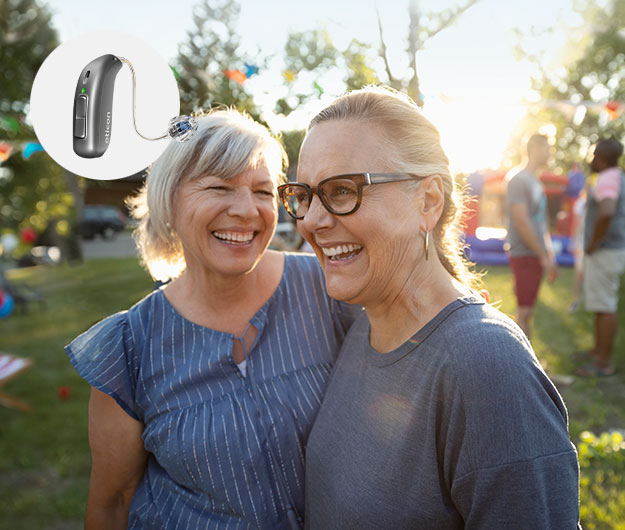
Truth: Nope. Not these days. Today's hearing aids are small and discreet. They come in a variety of models designed to go in the ear or behind it, but you can choose colors which blend in with your skin and hair as well. Today's hearing aid manufacturers take your cosmetic concerns seriously.
Myth #4: My hearing loss is mild. I don't need a hearing aid.
Truth: Once you have loss, it will typically only worsen if left untreated. Today's hearing aid technology can improve about 95% of hearing losses. Even mild loss can intefere with your life, so why risk it? Improve the quality of your life early on by treating your loss before it becomes more profound.
Myth #5: Only old people suffer from hearing loss.
Truth: It can affect anyone, at any age. It is caused by any number of biological or environmental factors, or a combination thereof. Older age is a factor, but it only accounts for about 40% of hearing loss cases.
Myth #6: I may have signs of hearing loss, but since my doctor has not said anything, I'm fine.
Truth: If you recognize signs of loss, it is time to see a hearing professional. Few family doctors and general practitioners make it a habit to routinely screen for loss. If you don;t say anything and no one is looking for it, your loss is likely to be ignored until you are concerned enough to be proactive about it. Because your regular doctor does not specialize in hearing, he or she may not know a lot about the issue. You could wind up with conflicting information or inadequate treatment. Odds are, your doctor will just refer you to a hearing care specialist anyway, so why not just see one about your concerns in the first place? You won't know until you visit a professional if digital hearing aids will be right for you or not.
|
Michael Curry is the communications director for Preferred Hearing a leading provider of Hearing Aid Reviews and is passionate about helping individuals with hearing loss lead a richer, fuller life. Article Source: Michael curry |
Article Source: http://EzineArticles.com/6186381
There are lots of high-tech hearing aids on the market today, many of these are designed to fit a wide range of hearing losses - from mild to profound – and can be customized to fit each user's needs. However, if you suffer from profound hearing loss, you might feel you need a super-power hearing instrument designed to specifically address the needs of those with severe hearing loss. While a super-power hearing aid won't fully restore your natural hearing ability, it can get you fairly close. Super-power hearing instruments operate on demand power and lots of it. This is to ensure that you are able to hear voice and sound in even the most demanding listening environments.
Audiologists understand the needs of individuals with profound hearing loss. They realize that you want a hearing solution that provides you with plenty of control, exquisite sound quality, comfort, convenience and the latest technology without costing a fortune. Your hearing care specialist can help you choose the hearing aid which is right for you. Often, they will assess your particular needs and make recommendations based on these needs, your lifestyle, your personal preferences and your budget. You simply have to ensure that the audiologist has some idea of what it is that you are looking for, even if you don't have a brand or model in mind just yet.
For those with profound hearing loss, you should ask your hearing professional if a hearing aid that covers a range of losses is suitable for you or if you should go with a hearing instrument that is designed to meet the needs of profound hearing loss alone. Chances are, you will want to go with a model suited to your specific level of hearing loss in order to combat your hearing trouble with the best possible solution. For many, a great recommendation is the ReSound Sparx hearing aid.
The ReSound Sparx has been designed as a powerful hearing aid for tackling the most profound hearing loss. We're talking super-power here, with a peak gain at around 86 dB and a maximum output level of 145 dB SPL. It offers exceptional comfort, feedback suppression, sturdy and reliable housing and easy to use push button control for programs and volume. Sparx is loaded with all the technological features needed to allow those with profound hearing loss to rely on this hearing aid in the quietest, moderate or even the noisiest of environments.
If you suffer from profound hearing loss, you want a hearing aid that offers you the best advantage. Going with a super-power hearing instrument is a smart move and one well worth the comparatively minimal expense. Hearing is a gift we all too often take for granted, and losing it is a difficult situation indeed. Don’t let hearing loss stand in your way. Do something about it with the advanced technology that digital hearing aids like the ReSound Sparx now offer.
SOURCE: Preferred Hearing
Chicago - Older adults with hearing loss appear more likely to develop dementia, and their risk increases as hearing loss becomes more severe, according to a report in the February issue of Archives of Neurology, one of the JAMA/Archives journals.
By the year 2050, an estimated 100 million people or nearly one in 85 individuals worldwide will be affected by dementia, according to background information in the article. Interventions that could delay the onset of dementia by even 1 year could lead to a more than 10% decrease in the prevalence of dementia in 2050, the authors note. “Unfortunately, there are no known interventions that currently have such effectiveness,” they write.
Candidate risk factors for dementia include low involvement in leisure activities and social interactions, sedentary state, diabetes mellitus, and hypertension, and another potential risk factor is hearing loss.
To assess whether hearing loss is another potential risk factor, Frank R. Lin, MD, PhD, of Johns Hopkins Medical Institutions, Baltimore, and colleagues studied 639 individuals age 36 to 90 without dementia. Participants initially underwent cognitive and hearing testing between 1990 and 1994 and were followed for the development of dementia and Alzheimer's disease through May 31, 2008.
Of the participants, 125 had mild hearing loss (25 to 40 decibels), 53 had moderate hearing loss (41 to 70 decibels) and six had severe hearing loss (more than 70 decibels). During a median (midpoint) follow-up of 11.9 years, 58 individuals were diagnosed with dementia, including 37 who had Alzheimer's disease.
The risk of dementia was increased among those with hearing loss of greater than 25 decibels, with further increases in risk observed among those with moderate or severe hearing loss as compared with mild hearing loss. For participants age 60 and older, more than one-third (36.4 %) of the risk of dementia was associated with hearing loss.
The risk of developing Alzheimer's disease specifically also increased with hearing loss, such that for every 10 decibels of hearing loss, the extra risk increased by 20 %. There was no association between self-reported use of hearing aids and a reduction in dementia or Alzheimer's disease risk.
“A number of mechanisms may be theoretically implicated in the observed association between hearing loss and incident dementia,” the authors write. Dementia may be overdiagnosed in individuals with hearing loss, or those with cognitive impairment may be overdiagnosed with hearing loss. The two conditions may share an underlying neuropathologic process.
The authors continue, “Finally, hearing loss may be causally related to dementia, possibly through exhaustion of cognitive reserve, social isolation, environmental deafferentation [elimination of sensory nerve fibers], or a combination of these pathways.”
If confirmed in other independent cohorts, the findings of the study could have substantial implications for individuals and public health.
The authors conclude, “With the increasing number of people with hearing loss, research into the mechanistic pathways linking hearing loss with dementia and the potential of rehabilitative strategies to moderate this association are critically needed.”
(Arch Neurol. 2011;68[2]:214-220)
SOURCE: JAMA
Decibels vs. Percent
Sound intensities are indeed measured in decibels (dB). There are two reasons why you can never equate decibels to percentages. First, the decibel scale is open-ended like that of the Richter scale used for measuring earthquake intensities. To calculate a percent you need to know the maximum value possible. In both of these scales there is no limiting maximum value. Therefore, you cannot calculate a percentage. Any attempt to do so is just a bunch of meaningless gibberish!
Second, the decibel scale is logarithmic, while the percent scale is linear. Numbers that appear to be similar have vastly differing meanings. They are as different as trying to compare apples to elephants!
When people talk about having a 50 percent hearing loss they likely mean that they have a 50 dB loss. Where did the idea come from that we can measure hearing loss in percentages? Here is how Brad Ingrao, an outstanding audiologist, explained it.
To measure sound intensity (the way audiologists measure it) you need to do a mathematical calculation that is so strange that 20 + 20 = 26 dB (SPL).
"To make a scale that makes sense to most people, a different equation is used to convert sound intensity using the Sound Pressure Level (SPL) scale to the Hearing Level (HL) scale that goes from 0 dB HL (normal threshold) to 120 dB HL (pain).
If we forget about hearing losses greater than 100 dB (like most people tend to do), we get 0 dB to 100 dB as the usable (dynamic) range of hearing for the average 'normal' ear.
Since doctors and audiologists tend to under-estimate their patient's ability to understand such things (or they don't understand it themselves), the erroneous concept of dB = % evolved."
Let's understand how this decibel scale works and why using a percentage value to describe our hearing losses is so very wrong.
First we need to understand that a decibel is not a given intensity (loudness) of sound, but rather, it is a ratio of how many times louder (or softer) a sound is than a given reference sound level.
This means that 0 dB is not the absence of sound, but is an arbitrary zero. We define it as the faintest sound that a young sensitive human ear can hear. Furthermore, because the decibel scale is logarithmic, every 10 dB increase in sound intensity is actually a ten-fold increase. Therefore, a sound intensity of 20 dB is not twice as loud as a sound intensity of 10 dB, but is 10 times as loud, and a sound intensity of 30 dB is 100 times as loud as a sound intensity of 10 dB. Similarly, a sound intensity of 50 dB would be 100,000 times as loud (10 x 10 x 10 x 10 x 10). This is how the decibel scale works. It is totally unlike the linear percent scale.
Now lets see the fallacy of trying to compare this "funny" decibel scale to the percent scale. To illustrate this, let's assume (remember this assumption we're making here is totally wrong) that 0 dB is equal to 0 percent hearing loss and that 100 dB equals a 100 percent loss. This would then mean that 50 percent would equal a 50 dB hearing loss, right? Wrong! Not by a long shot! A 50 percent hearing loss would equal, believe it or not, only a 3 dB loss! Looking at it the other way, a 50 decibel loss is not just half as loud, like it would be in a percentage scale, but would only be one thousandth of one percent as loud!
Here is another example. I have a 70 dB loss. This is not equal to a 70 percent loss by any means. In actual fact it means that the softest sound I can hear needs to be 10,000,000 times louder than the softest sound a person with normal hearing can hear. One out of ten million is definitely not a 70 per cent loss but would be a loss of 99.9999999%! Quite a difference, isn't it? Now you can see why we must never use percentages when talking about our hearing losses. They just do not equate. They are absolutely meaningless!
Percent Used to Describe Discrimination
Although we cannot use percentages to describe our hearing losses, we correctly use percentages to describe our ability to discriminate sounds. To determine our ability to discriminate between words, our audiologist sets the volume at our most comfortable listening level. She then has us listen to a list of words and we repeat back what we think we heard. The number we get right, converted to a percentage, becomes our discrimination score. Therefore, if I understood 80 out of 100 words in my right ear, my discrimination is 80% for that ear. I may have an entirely different result for my other ear. Consequently, we can correctly describe our ability to understand what we hear as a percentage. A person could correctly say that his discrimination is 78% in his right ear and 95% in his left ear. But this has nothing to do with the severity of our hearing losses as such.
Percentage and Hearing Disability
If your hearing loss resulted from an accident on the job, there is a formula that is used to calculate the percent disability pension for which you may be eligible. Don't get mixed up. This is not your hearing loss expressed as a percentage. Rather, this formula calculates how much your degree of hearing loss supposedly impacts your ability to remain employed at full wages.
For example, plunking your hearing loss levels into the formula may yield a result of 75%. This means that with your particular hearing loss, you may be entitled to a 75% disability pension. Again, this is not your average hearing loss expressed as a percentage.
Classifying Our Hearing Losses
Hearing health care professionals classify hearing into several categories such as normal, slight, mild, moderate, moderately severe, severe, profound and deaf. Not all of them use all of these categories, nor do they all use the same hearing loss ranges in each one. In the past, most used this simple scale.
Simple Hearing Classification Hearing Threshold
|
Normal hearing |
down to 20 dB |
|
Mild hearing loss |
21 to 40 dB |
|
Moderate hearing loss |
41 to 60 dB |
|
Severe hearing loss |
61 to 90 dB |
|
Profound hearing loss |
below 90 dB |
Today, research has shown that even hearing losses of only a few decibels can cause significant hearing problems. As a result, many hearing healthcare professionals have fine-tuned this scale to better reflect this reality. (Note that these ranges are arbitrary and may vary slightly among authorities.)
Today's Hearing Classification Hearing Threshold
|
Normal hearing |
-10 to 15 dB |
|
Slight hearing loss |
16 to 25 dB |
|
Mild hearing loss |
26 to 40 dB |
|
Moderate hearing loss |
41 to 55 dB |
|
Moderately severe loss |
56 to 70 dB |
|
Severe hearing loss |
71 to 90 dB |
|
Profound hearing loss |
91 to 120 dB |
|
Deaf |
below 120 dB |
Describing Our Hearing Losses
Unless you have a "flat" curve on your audiogram, how can you accurately describe your hearing loss? Your hearing loss could be different at every frequency so one word could be meaningless.
The best way is to be specific. If I have the typical "ski slope" hearing loss, I could describe it as, "I have a 30 dB loss at 500 Hz, dropping to 100 dB at 4,000 Hz." A more general way, but still accurate, would be to describe it as, "I have a mild loss in the low frequencies, dropping to profound in the higher frequencies.
The next best way to describe our hearing losses is to average the 4 frequencies that carry most of the speech information to arrive at a single figure. Use the following four frequencies—500 Hz, 1,000 Hz, 2,000 Hz and 3,000 Hz—and average the hearing loss at these frequencies to come up with one figure. However this method falls down if we only have a bit of hearing left in the very low frequencies. Incidentally, it is not right to take the average of our best and worst figures. That could give a very wrong impression of our hearing losses.
If you want a very simple way to describe your hearing loss, the most accurate (and simple) is to say you have either a mild, moderate, severe, or profound hearing loss. Your audiologist can tell you which category your hearing is generally in. (Remember, you could be mild in the low frequencies and profound in the highs—but to oversimplify, you can reasonably accurately reflect your practical hearing loss by using one of these categories.) It is much more meaningful, and far more accurate than trying to use a meaningless percentage.
Sergei Kochkin, Ph.D. Executive Director
Better Hearing Institute
One of the most aggravating aspects of living with an individual with hearing loss, who is in denial (everyone mumbles they say), is constantly repeating your self, speaking louder, or interpreting the world for them. There is a way to release yourself from this maddening co-dependent relationship and at the same time to motivate your loved to seek help for their hearing loss.
Dr. Richard Carmen has done a masterful job of offering help to family members in his book How hearing loss impacts relationships: Motivating your loved one. In addition as advisor to the Better Hearing Institute he offers suggestions on our website under the title.
I encourage all people caught in the trap of being the ears for their loved one to read Dr. Carmen's book and his advice on this website. But let me summarize the key aspects of how you can set yourself free:
Here is one very clever intervention that could set you free. Explain to your loved one as follows in a calm, loving, non-condemnatory voice:
The whole family has had a talk. We believe you have a hearing loss and in the past we have helped you by speaking louder, repeating ourselves, or interpreting what other people have said. In effect we have become your hearing aid. But we realized this might not be the most loving acts we can do for you. We love you very much and want you to get help for your hearing loss. So from now on we will move toward stopping repeating ourselves when you say "Huh" or "What did he say?" and we will move toward no longer speaking louder so you can understand us. Instead we will simply say the words "Hearing Helper" (or choose another signal word that has meaning for your family) before we give you help. This is our signal to you that you have just asked us to be your ears. This is our way of demonstrating our love for you — that is by showing you how many times you ask for help. So for X period of time (e.g. a few weeks) we will continue to help you but we will preface our help with the words "Hearing Helper"…we think in a short period of time you will realize how many times you seek our help in hearing."
Many loved ones in denial will soon realize how much they use your ears; when this happens they will seek help. Encourage them in their journey to a world of better hearing. And enjoy your new found freedom!
(Note: this advice is ONLY for people in denial and who have not sought help for their hearing loss)
Another resource to provide you with access to many helpful hearing related articles.